- Products

Key Challenges in the Industry
Everyone’s preferred journey from A to B is personal, with some prioritising journey times, some preferring specific modes and others taking account of reduced mobility or fewest connections.
Any journey planner seeking to provide the best personalised journey plan options requires a network model covering every step of the journey in this level of detail (lifts, steps, escalators, ramps, walking distance).
RailBat have developed a developed a NAPTAN-compliant best in class network model of the London transport network which enables this level of specificity for users. Our BatNav model integrates with Transport For London data feeds, such as Lift Status and we can advise which can even advise which specific carriage and door to use for the best connnection at your interchange or destination station.
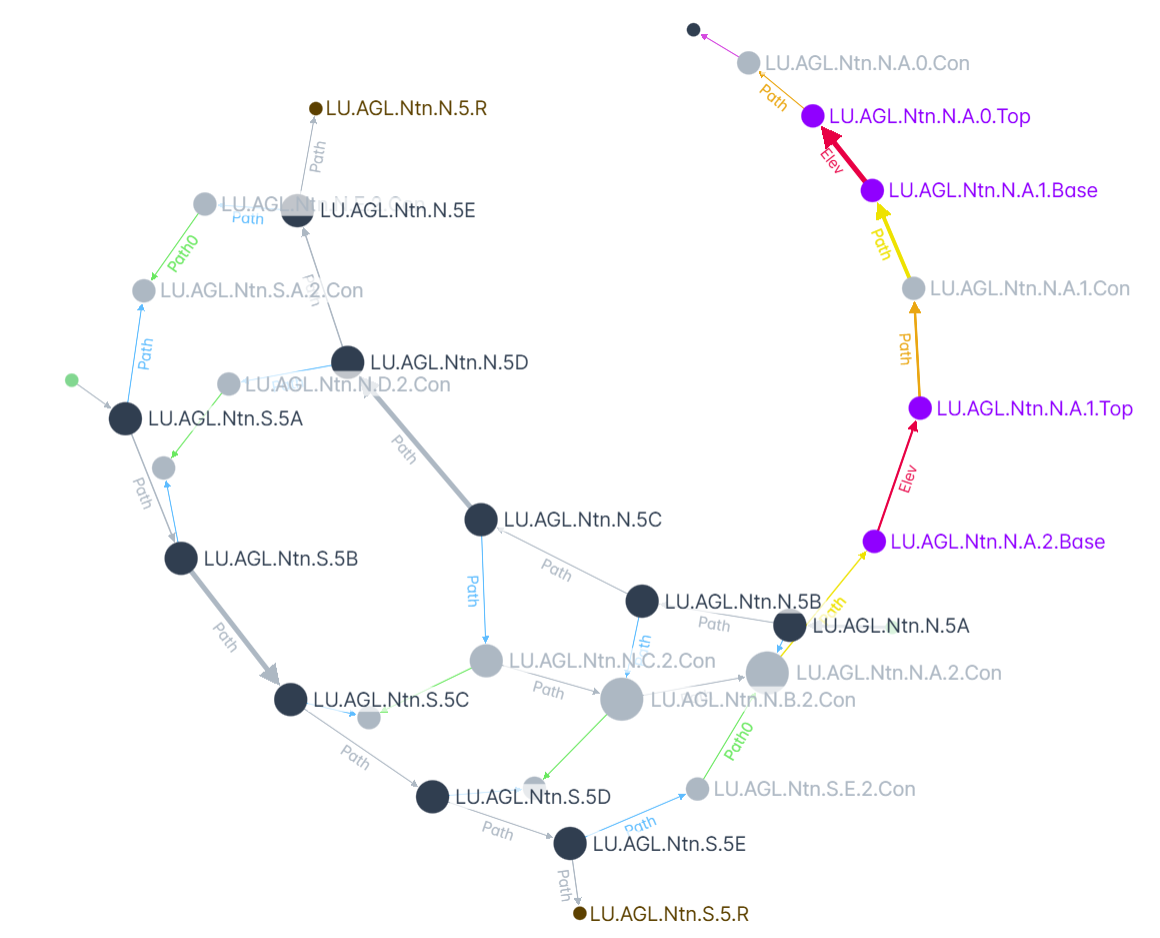
RailBat BatNav addresses these challenges head-on, providing world-leading urban transport network model
Data standards compliance
Our datasets are designed for integration, compliant to NAPTAN international standards and aligned with existing location conventions (e.g. TfL) where appropriate for maximum compatibility and best-practice.
Detailed network model
Our topological model accounts for every single key node in the station to personalise your routing. Each proposed route summarises the distances, number of steps
User-focussed information
‘Step-free’ is an essential routing offering, but passengers with reduced mobility may have more nuanced trade-offs between distance and steps. If a small number of steps can save a lot of walking, this might be a preferable option. With our network model, you can present this information to users when planning journeys
Reflect live/expected status of key assets
As our model is compatible with TfL feeds for things like Lifts status unavailable, these issues can be highlighted to users as they plan their journey rather than when they arrive.
Our solution delivers tangible benefits to operators and passengers alike:
Enhanced passenger confidence
Reduced-mobility passengers who know the specific step requirements for their planned journey can have confidence to take a journey they wouldn’t have taken otherwise, and less likely to find themselves in difficulty and requiring assistance.
Personalised information
Everyone’s walking/wheeling speed is different, including when we go up or down stairs and escalators. We provide the fundamental information, such as distance and steps, so you can present journey time to users in the most appropriate way OR let them adjust time themselves
Improved passenger flows
Passengers stood in the right places for their connections, and not blocking platforms with suitcases working out their exit does not just benefit them. It also benefits the safe flow of other passengers.
Economic Benefits
Time spent below ground is time lost to the economy, both in the productive output of workers and the retail spend of tourists. Getting people to their exits more quickly would contribute millions of pounds per year to the UK economy.
Ready to take your steps/escalator/lift data to the next level?
Learn how RailBat BatNav can empower your data with London’s best network model.
For a consultation or a product demo, please get in touch.
Or alternatively, call us on 07726 914131